What Is a Sales Funnel and How to Build One

June 19, 2026
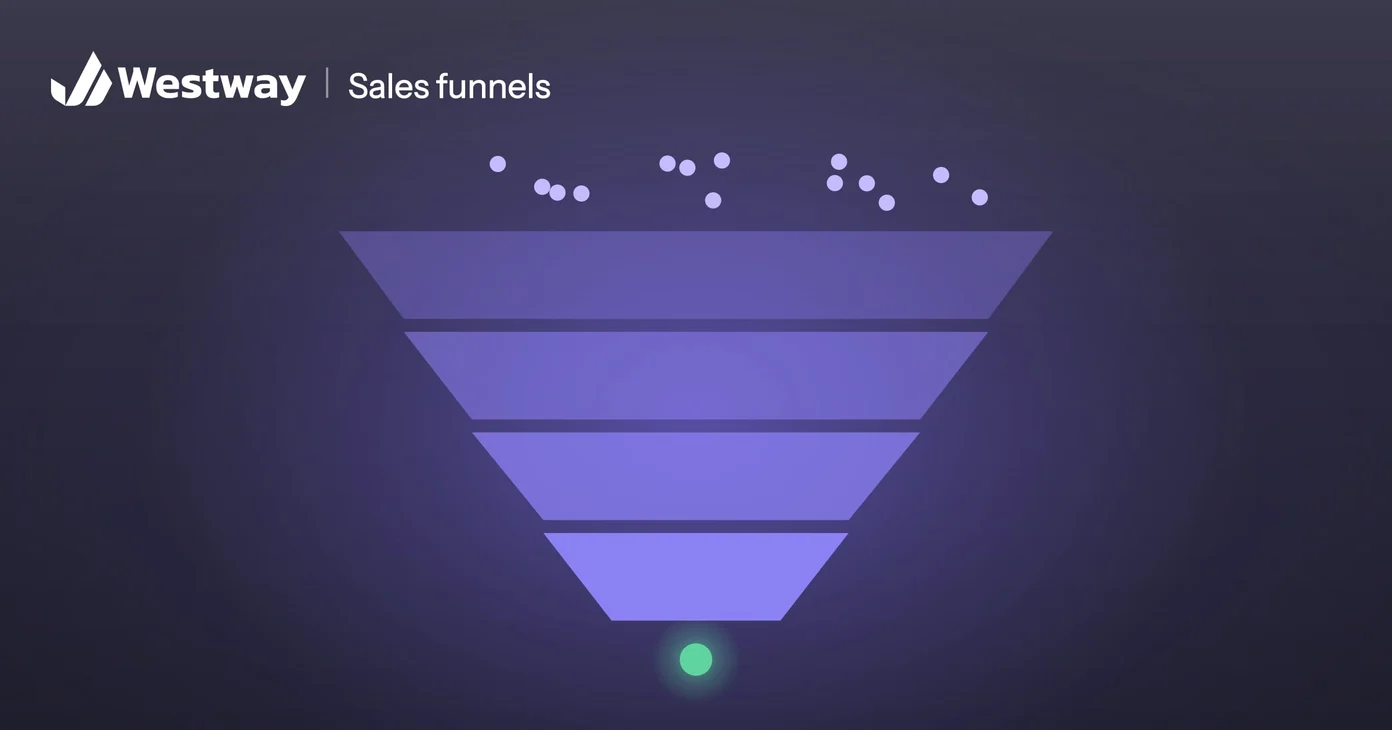
A sales funnel is the journey a person takes from first hearing about your business to becoming a paying customer, broken into stages so you can guide them at each step. The name comes from the shape: many people enter at the top, and a smaller number come out the bottom as customers. Understanding your sales funnel lets you see where you lose people and fix it. This guide explains the stages and how to build one.
What are the stages of a sales funnel?
Most funnels follow four broad stages: awareness, interest, decision, and action. Awareness is the top, where people first discover you through search, social, or word of mouth. Interest is where they want to learn more and start comparing options. Decision is where they weigh whether to buy from you specifically. Action is the bottom, where they become a customer. A healthy sales funnel moves people smoothly through all four, with content and prompts suited to each stage.
Why do you need a sales funnel?
Without a defined funnel, marketing becomes a series of disconnected efforts with no clear path. You might attract plenty of visitors who never buy, or push for the sale before people trust you. Mapping the journey shows you the whole picture at once. It reveals where prospects drop off, so you can focus on the leak costing you most rather than guessing. Marketing resources from groups like HubSpot cover this thinking in depth.
How do you build a sales funnel?
Start by listing what a customer does from first contact to purchase, then match each stage with the right help. At the awareness stage, create content that answers the questions people have when they first realize they have a problem. At the interest stage, offer comparisons, guides, and reasons to trust you. At the decision stage, remove doubt with proof, guarantees, and clear pricing. At the action stage, make buying effortless. Each stage of the sales funnel hands the person to the next.
How do you find the leaks in your funnel?
Track how many people move from each stage to the next, and you will see exactly where the biggest drop-off is. The real value of a sales funnel is diagnosis. If lots of people visit but few inquire, your interest stage is weak. If many inquire but few buy, the decision stage needs work. Fixing the worst leak usually returns far more than chasing more visitors for the top.
What do you need to start a funnel?
A clear understanding of your stages, a few pieces of content for each, and a way to measure movement between them is enough for most small businesses. A sales funnel does not need fancy software to begin. You can add tools later. Starting simple beats waiting for a perfect system you never build.
Why should you nurture people who are not ready to buy?
Most visitors are not ready to buy the first time they meet you, and a common mistake is ignoring everyone who does not convert immediately. A strong sales funnel includes a way to stay in touch with the people in the middle, interested but not yet decided. This is where capturing an email address and following up with genuinely useful content earns its keep. Instead of pushing for the sale, you keep providing value, answering questions, and building trust until the person is ready. Many of your eventual customers come from this patient middle, not from the small group who buy on day one. Building nurture into the funnel, rather than treating every visitor as buy-now-or-never, is often the single biggest lift a small business can make to its results.
What mistakes weaken a funnel?
A few mistakes weaken even a well-mapped sales funnel, starting with pushing for the sale too early, before trust exists, which scares off people who would have bought later. The second is the opposite: attracting plenty of interest but never making a clear ask, so warm prospects drift away. The third is ignoring the people who do not buy immediately, when a simple follow-up would have converted many of them in time. The fourth is treating every visitor identically, instead of matching your message to where they are in the journey. Avoiding these is mostly about empathy: meet people where they actually are, not where you wish they were. A funnel that respects the customer’s pace, guiding rather than rushing, consistently outperforms one built only around the moment of sale.
Frequently asked questions
Is a funnel only for online businesses?
No. Every business has a journey from awareness to purchase; the funnel just makes it visible and improvable.
How is it different from a sales process?
The funnel is the customer’s journey; the sales process is your side of guiding them through it. They fit together.
Do I need special software?
Not to start. Understanding the stages and measuring drop-off matters more than any tool.
What is the most common weak point?
Often the middle, where interest should turn into trust. Many businesses jump to selling too soon.
Build a funnel that converts
A clear sales funnel turns scattered marketing into a guided path that steadily produces customers. Our marketing team helps businesses map their funnel, find the leaks, and fix the stages costing them sales.