What Is a CDN and Does Your Site Need One?

July 7, 2026
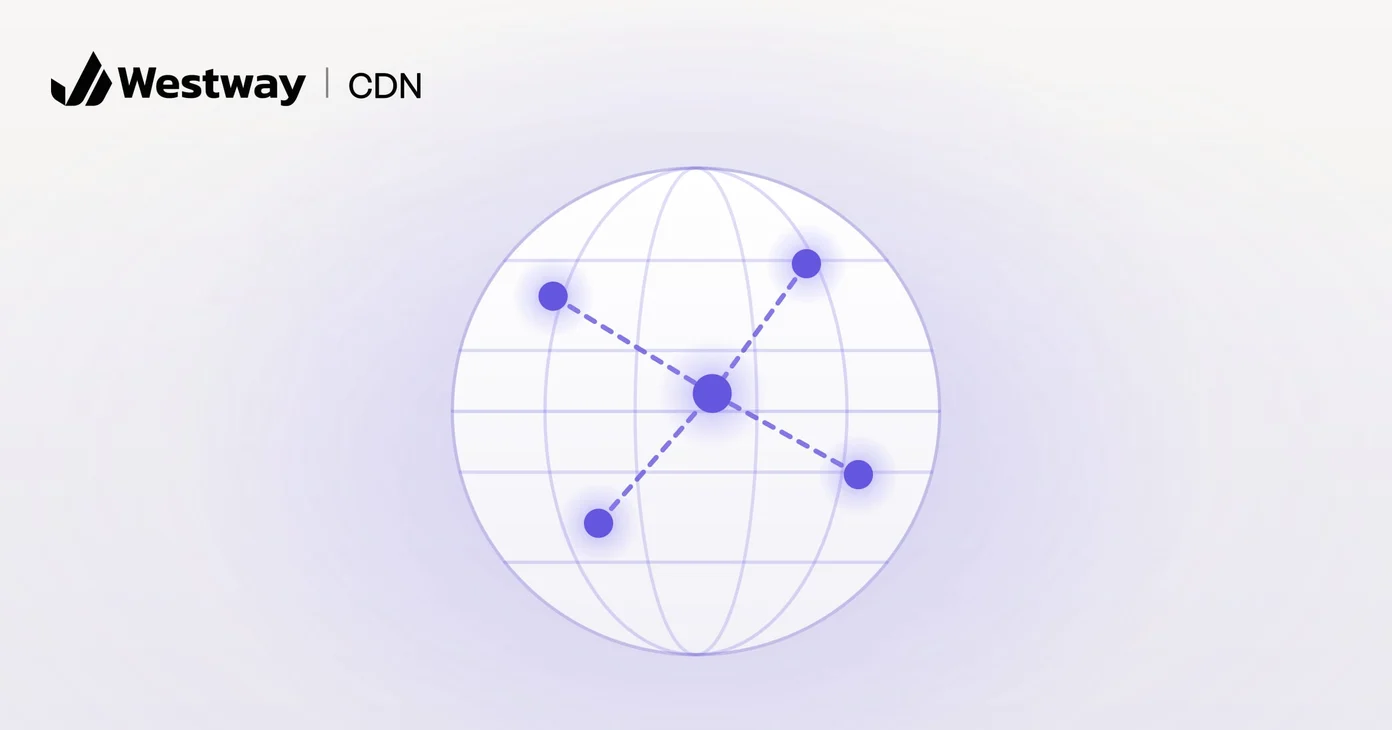
A content delivery network, or CDN, is a group of servers spread across the world that work together to deliver your content faster to visitors, wherever they are. Instead of serving every visitor from a single location, a CDN stores copies of your site on servers closer to the visitor, so pages load in milliseconds rather than seconds. For many websites, especially those with a global audience or heavy media content, a CDN is the difference between a site that feels snappy and one that feels sluggish. This guide explains what a CDN is and whether you need one.
How does a CDN work?
When you use a CDN, you point your domain to its network instead of directly to your web host, and the network serves each request from the server nearest to the visitor geographically. So a visitor in Tokyo gets your content from a Tokyo server, one in London from a London server, and one in New York from a New York server. If the nearest server does not have a fresh copy, it pulls a new one from your origin server and caches it for future requests. This process is transparent to the visitor, but it cuts load times dramatically, especially over long distances. It simply puts geography and physics to work in your favor.
Why does distance slow down a website?
Even at the speed of light, roughly 186,000 miles per second, data takes real time to travel across the world. A request from Asia to a server in North America loses hundreds of milliseconds to distance alone, which compounds across multiple files and requests. A CDN collapses that distance by placing content nearby. For any site with an international audience, the improvement is noticeable and measurable in both user experience and search rankings, since engines reward fast sites. Even for a local business, visitors travel and expect consistent speed on mobile, and a CDN helps deliver that uniformly.
What can and can’t a CDN speed up?
A CDN excels at serving static content: images, videos, CSS, JavaScript, and HTML files. These are easy to cache and benefit hugely from proximity. It is less helpful for truly dynamic content generated per-request or content that changes constantly, though modern networks are improving at this. Database queries still need to reach your origin server, so a CDN alone cannot fix a slow backend. However, most sites carry substantial static weight, so a CDN usually delivers a noticeable speedup even if it is not a complete solution. Major providers have expanded beyond caching to include dynamic content handling and other performance optimizations, so the boundaries are blurring.
Does your site actually need a CDN?
The honest answer is: probably, but it depends on your situation. If your visitors are mostly local and your site already loads quickly, the improvement will be modest. If your audience spans continents, or your content is heavy with video or large files, a CDN often pays for itself in better rankings and lower bounce rates. Many CDN providers offer free or low-cost tiers, so you can test the impact before committing resources. Start by checking your current load times from different countries using a free tool, assess how much room for improvement exists, and decide whether a CDN is worth the cost. For most mid-size and larger sites, the answer is yes. For a small, text-heavy site serving a local area, other performance improvements might come first.
Frequently asked questions
Do I need a CDN if I have a fast host?
A fast host helps, but a fast host far away is still slower than a slower host nearby. A CDN adds a layer of speed regardless of host quality.
Will a CDN fix my slow website?
Partly. It handles static content brilliantly, but cannot fix a slow backend or poorly optimized code. Use it alongside other speed improvements.
Is a CDN hard to set up?
No. Most CDN providers keep setup straightforward, usually just a DNS change. Setup takes minutes, not hours.
How much does a CDN cost?
Many offer free tiers for modest traffic. Paid plans start small and scale with usage, so costs grow as your site does.
Can I see the speed improvement?
Yes. Tools like Google PageSpeed Insights and WebPageTest show load times from different locations, so you can measure before and after.
Speed up your site globally
A CDN is one of the highest-return investments in site speed, especially for businesses with international audiences or heavy media. Our Development & Engineering team can evaluate whether a CDN fits your site and handle the setup.