How to Prioritize Features on a Limited Budget

July 23, 2026
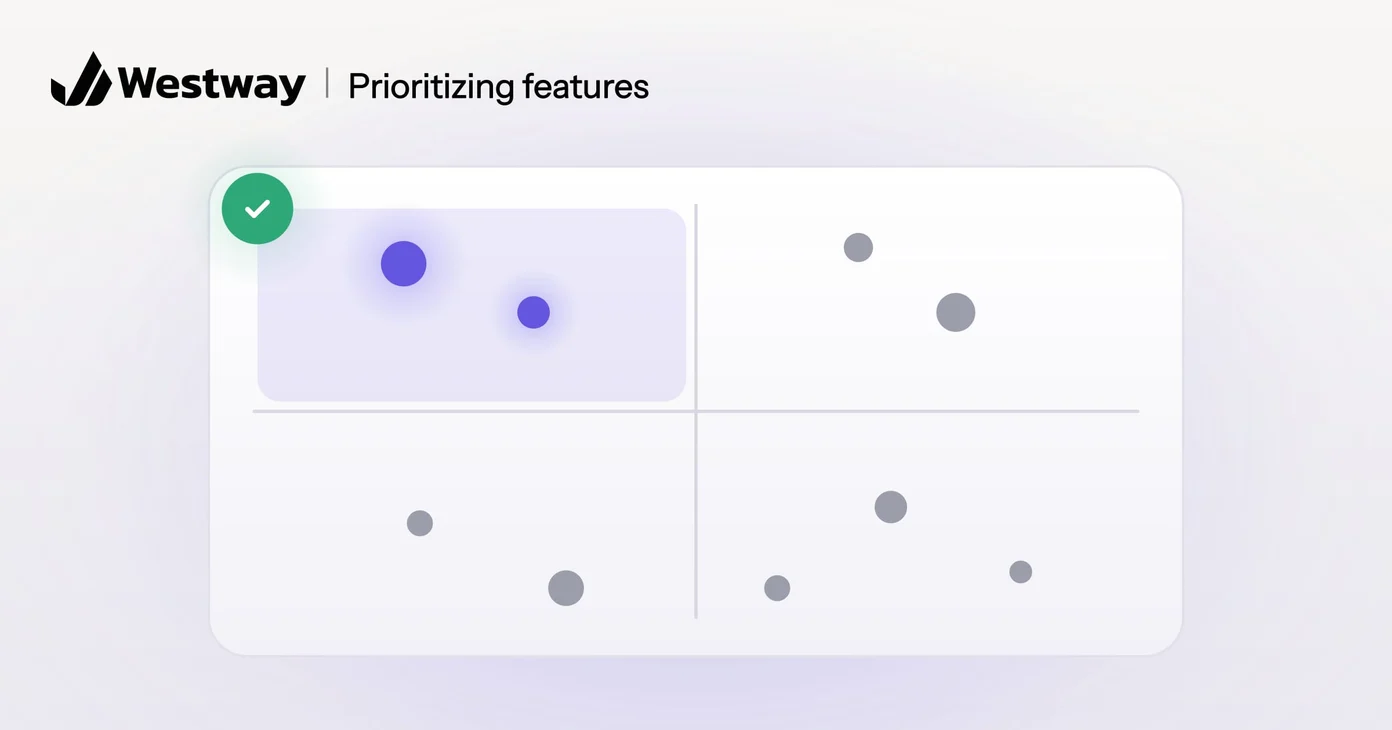
Every business has more feature ideas than the budget to build them. The difference between success and failure is often not the features a team ships, but the ones they choose not to ship. To prioritize features well means focusing effort where it returns the most value, rather than building everything half-heartedly or letting the loudest voices win. For teams on a tight budget, prioritization is the only way to survive. This guide covers frameworks that work.
Why does poor prioritization kill projects?
Teams that do not prioritize features tend to scatter. They build what is easiest, what the boss wants, what customers complain about loudest, or what the lead engineer is excited about, rather than what actually matters for the business. Frameworks from sources like Intercom help teams think through this systematically. The result is a product that is unfocused, full of half-built features, and missing the core things that would justify the cost. When the budget runs out, the team has spent all their resources and built nothing that users find essential. Good prioritization fights this by creating a clear standard for what gets built and what gets deferred.
What frameworks help you prioritize features?
Impact versus effort, ICE and RICE scoring, and the Kano model all help prioritize features objectively. The simplest is impact versus effort: list feature ideas, estimate how much they will help the business and how much work they cost, and focus on the high-impact, low-effort items first. ICE scoring adds a confidence check, rating each idea on Impact, Confidence, and Ease. RICE, the method Intercom developed, also adds reach: it multiplies Reach, Impact, and Confidence, then divides by Effort. The Kano model distinguishes between features that delight, features that matter, and features that fix problems. None is perfect, but applying any of them consistently beats guessing. The key is using the same framework each time so decisions are consistent and defensible, rather than driven by whoever spoke last.
What does impact mean in feature prioritization?
Impact is how much a feature moves the needle on your core metric, whether that is revenue, users, retention, or satisfaction. It is not “would be cool to have” or “sounds interesting.” A feature that costs a lot of work but only moves the needle one percent should rank below a small fix that moves it ten percent. This is where teams often go wrong: they estimate impact based on enthusiasm rather than evidence. Ask customers which missing features keep them from recommending you. The answers tell you what impacts satisfaction most. Track your main metric before and after adding features to see what actually moved it.
Why does saying no matter in prioritization?
Prioritization is as much about what not to build as what to build. A feature that ranks fourth in the priority list is often left unbuilt because the budget runs out, which is fine. What is not fine is building it anyway because the person asking was persistent. Discipline about the prioritization list, and the willingness to defer or kill low-priority ideas, is what makes the prioritization exercise matter. Without that discipline, you end up building everything, prioritizing nothing, and running out of money before you ship anything critical.
Should you revisit your priorities?
Yes. Your first prioritization list is educated guessing; reality will prove some guesses right and some wrong. After you ship a feature, measure its impact against your estimate. Did it move the needle the way you predicted? This feedback tightens your estimation over time, making your prioritization more accurate with each cycle. Teams that revisit their prioritization every quarter, learn from what they shipped, and adjust their estimates become very good at spending their limited budget on things that matter.
Frequently asked questions
Who should be involved in prioritization?
A mix of perspectives: the person closest to customers, someone from the product side, someone from the team doing the work, and a decision-maker. The mix helps prevent any one viewpoint from dominating.
Should I prioritize based on what customers ask for?
Partially. Customers know what bothers them, but they do not always know what would help most. Weight customer feedback heavily but do not take it as gospel.
What about fixing bugs versus adding features?
Bugs that block core functionality should be fixed immediately. Bugs that are minor annoyances can be prioritized alongside features.
How do I handle priorities that conflict with the CEO’s pet project?
Present the impact and effort clearly. If the CEO’s project still wins, accept it and adjust the rest of the list. But at least you have the conversation on data, not assumption.
Ship the features that matter most
A clear prioritization framework focuses your limited resources on features that actually drive results. Our digital strategy team helps businesses evaluate feature ideas, prioritize roadmaps, and allocate budgets where they return the most.