Meta Descriptions That Get Clicks: How to Write Them

June 29, 2026
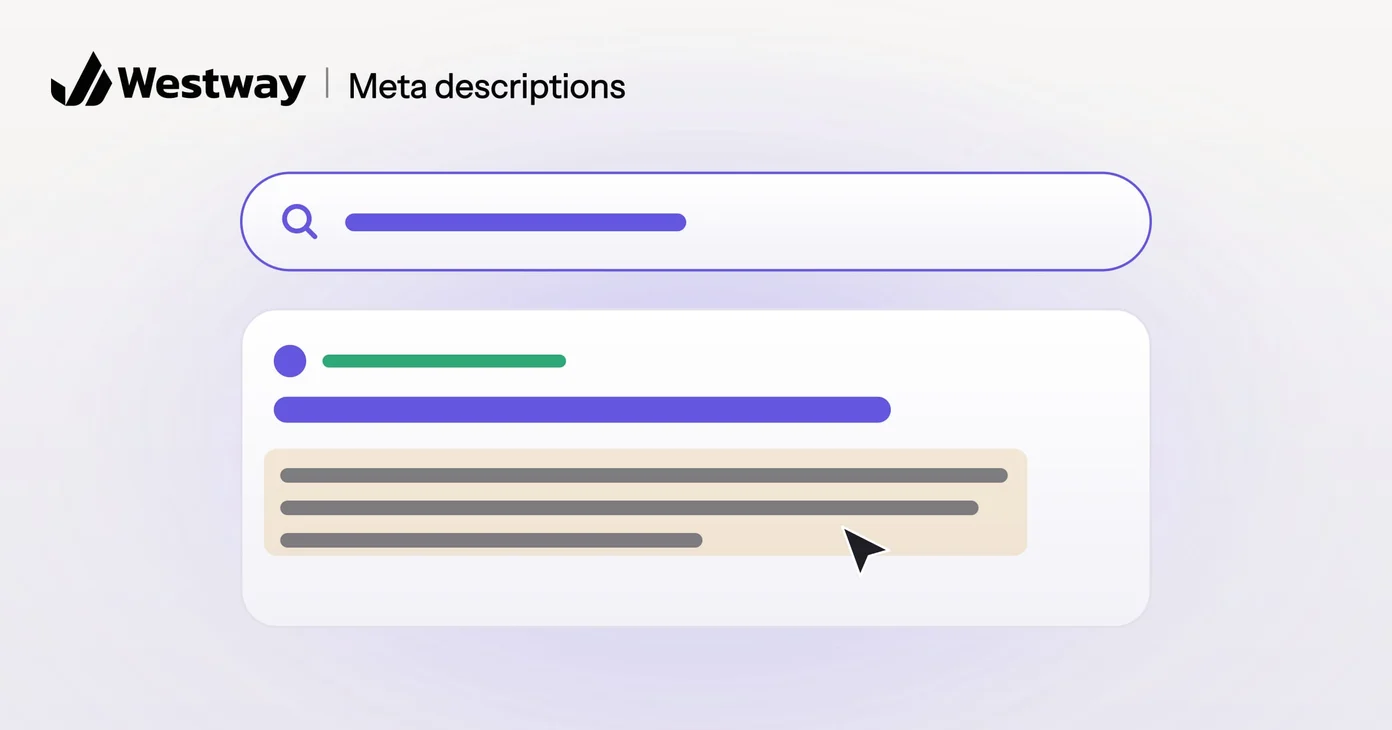
A meta description is the short snippet of text that appears under your page’s title in search results. It does not directly affect your ranking, but it heavily influences whether someone clicks your result or a competitor’s. A good meta description is effectively free advertising in the exact moment someone is deciding where to click. This guide shows how to write meta descriptions that earn the click.
What does a meta description do?
When your page appears in search results, the meta description is the pitch beneath the title. Search engines sometimes write their own from your page, but providing a clear, compelling one gives you control over that pitch. Think of it as ad copy for a free spot on the results page. Its whole job is to convince a searcher that your page answers their question better than the others around it.
Why do meta descriptions matter for clicks?
Two pages can rank in similar positions, and the one with the more compelling description wins more clicks. Since click-through influences how much traffic a ranking actually delivers, a strong description multiplies the value of every position you hold. Google explains in its search snippet documentation that a good description acts like a pitch for the page. Ignoring it leaves clicks, and traffic, on the table.
How do you write meta descriptions that get clicks?
Keep each one to roughly 150 to 160 characters so it does not get cut off. Include the keyword the searcher used, since matching words appear bold and reassure them they are in the right place. Describe the concrete benefit of clicking, and end with a gentle reason to act. Each one should be written for that specific page, never copied across the site.
What meta description mistakes should you avoid?
Four habits waste this opportunity: leaving it blank, duplicating it, stuffing it with keywords, and writing a vague line. Leaving it blank hands control to the search engine, which may pull an awkward sentence from your page. Duplicating the same text across many pages confuses both searchers and search engines. Stuffing it with keywords reads as spam and repels clicks. And writing a vague, generic line wastes the space. Treat each one as a small, deliberate piece of copywriting.
Why should the description match the page?
The fastest way to lose a visitor is a snippet that oversells or misleads. If the meta description promises something the page does not deliver, people click, feel cheated, and leave, which can hurt you over time. The best ones make an honest, specific promise that the page then keeps. Accuracy builds the trust that turns a click into a customer.
What is a simple formula for meta descriptions?
Lead with the main benefit or the answer the searcher wants, work in the keyword they used naturally, and close with a light reason to click, such as what they will learn or get. For a page on tax deadlines, that might read as a clear promise of the key dates plus a nudge that the page lays them out simply. Keep the tone active and specific, write in full, natural language rather than a string of keywords, and make sure it reads like a sentence a person would say aloud. Then check it at the right length so search engines do not truncate it. One good meta description per page, written to this pattern, consistently outperforms the generic lines most sites settle for. It takes a couple of minutes per page and quietly raises the return on every ranking you hold.
Why does meta description length matter?
Length matters because search engines display only so much before cutting the text off with an ellipsis, so a description that runs long loses its ending, often the very reason to click. Aim for roughly 150 to 160 characters, treating that as a ceiling rather than a target to fill. Front-load the most important words, so even if the tail gets trimmed on some screens, the core message survives. Remember that mobile results may show less than desktop, which is another reason to put the value first. You do not need to hit the maximum; a punchy, shorter meta description can outperform a padded one. Write the sentence you want a searcher to read, then trim anything that does not earn its place. Clear and complete beats long and cut off every time.
Frequently asked questions
Does a meta description affect ranking?
Not directly. It influences click-through, which affects how much traffic a ranking brings you.
How long should it be?
Around 150 to 160 characters. Longer and search engines may cut it off mid-sentence.
What if I leave it blank?
The search engine writes one from your page, often awkwardly. Writing your own gives you control.
Should every page have its own?
Yes. Each page deserves a unique meta description written for its specific content.
Turn rankings into traffic
Well-written meta descriptions quietly lift the traffic you get from every ranking you hold. Our marketing team helps businesses sharpen the details that turn search visibility into actual visitors.